Showing posts with label seaside. Show all posts

Monday, 23 September 2013

Friends in high places


Jonathan  (all photos: Gigi, album)
 
"The gull sees farthest who flies highest."
(Richard Bach)  

Sometimes, it can seem that the very people we care about or lean on leave us, whether voluntarily or reluctantly. Affinities, vows, rings, paper and words; the things that are seen to bind can fall away quite suddenly. And sometimes, animals seem to appear through the cracks in our daily lives, nudging their way into our conscience and our consciousness. Even long domesticated animals remain wild at heart. We may cage them, harness them, clip and tag them,  ply them with treats and catnip, but they still choose whether or not to love us. It's true that some animals see their humans as a consistent supply of ready meals, yet even so they may never develop a brand loyalty to us. And the unsolicited and unbound companionship of a truly wild and free creature is always a precious thing. 
Jonathan Seagull didn't so much nudge as muscle his way into my life, bill first, through the catflap I inherited from the previous home-owner. Ginger from next door has only just mastered it, after more than two years of cajoling, nagging and motivational pep talking from me. It has a Perspex flap, so I can see which neighbourhood scally-cat or fearless fox has come calling.
Very shortly after I moved into the little house, I heard an insistent and quite irritated tap-tapping at the catdoor one squally night. It spooked me. Peering from the darkness of my kitchen on my hands and knees, I saw a wild-eyed gull staring back at me. I looked. He looked. Suddenly he flapped and bashed the catflap again. In true Hitchcockian-blonde-I've-seen-"The Birds"-style, I screamed. He screamed back. After a while, he hopped onto my garden bench, setting the security light off. From the back window, I could see what a big bird he was. Herring gull; full grown, sharp eyes, impressive bill. And a gammy left foot which he couldn't quite put down. Just as he was about to give up and started to spread his wings, I opened the back door.
"Hello Mr Seagull. How are you?" Even I realised how pathetic this sounded. The bird lowered his wings, cocked his head and surveyed the human he'd chosen to call on, resplendent in mini leopard print bathrobe and flipflops. I'd never seen a gull look disparaging before; I've now become familiar with that look.  "My name's Gisele, Mr Seagull." Seldom in my life have I felt so foolish, which is saying something.
"Mr Seagull" would quickly became "Jonathan", after the title character in one of my favourite books. Richard Bach's "Jonathan Livingston Seagull" is a soaring analogy about spirit; the story of a seagull's search for perfection through flight. After feeding him oven chips that first night, I assumed he would never return to my staunchly vegetarian home, but I did hope. My Dad used to rescue and tend to injured birds back in south London; most of them returned to the skies. One distinctive and clearly grateful pigeon called "Roucal" returned to my Dad's nesting box and bird-table for many years. But I had no real experience of seagulls.
I couldn't get near to his sore foot of course, but as he snapped at the chips I gathered that it was tender underneath. I realise now that he wouldn't have been able to swoop for food or perch properly to eat it. It was raining persistently when Jonathan first arrived and there were muddy puddles forming in the cracked cement in my backyard.. As I scattered his second serving of chips, I thought I might try a few drops  of TCP in the puddles he was hopping through. I had no idea if this might be beneficial in any way, but eventually I realised he was staying relatively still in one doctored puddle.
He stayed for about an hour, until there were no more fresh chips and he'd tired of my wittering. He flapped up and out into the darkness, leaving me and my bathrobe drenched, starving and startled by the whole episode. The next morning I ventured out to clear up any soggy leftovers and possibly a copious amount of droppings. A splutter of feathers rushed down from my back roof. I assume he'd slept there overnight.. Still largely balancing on one leg, he ate my breakfast crumpets with unconcealed disdain. He flapped off skyward after another hour and I headed off to the laptop to Google the life and culinary loves of the herring gull.
Jonathan's foot healed over the next couple of months. We discovered that he liked raw broccoli but not asparagus, was partial to cat biscuits and over-ripe tomatoes and would tolerate my vegetable fingers in the absence of fish.  He loved salmon flavoured cat treats but spat the cheesy ones out at me with ferocious accuracy. His love of all things spud rivals my own; maybe Jonathan had an Antrim mother too. As he healed he was able to sit on my garden bench and table and perch on the old shed. As his landings and take-offs became more adventurous, he terrorised the other garden birds and traumatised next door's cat. He monopolised my large basin birdbath, sometimes completely up-ending it during crash and splash landings.
He's even ventured into the kitchen when I've left the backdoor open without properly acknowledging his presence. He's filled my front and back guttering with moss and more unmentionable things as he's gradually commandeered the whole of my roof. His bad-boy landings in a confined space have destroyed pots, plants and lanterns. He quickly learned how to manipulate the security light and will still tap at the catflap from time to time, his calling-card. 


Out front, Jonathan will sit on random parked cars outside my window and flap about while I'm on the 'phone. Unattended for too long, he will crap all over the cars, from bonnet to boot. He craps on my garden bench and table, on my neighbours' washing and even on the cat if possible; and once on me, which I feel was memorable for both of us in differing ways. I know this is said to be lucky, but it feels terribly unfortunate at the time.
More than two years since he first knocked at my catdoor, his visits have become far less frequent but I now know not to worry if he doesn't appear for a month or more. People nod sympathetically when I say I know he'll always come back. Herring gulls have been known to have long memories and can live for twenty to thirty years. Jonathan seems quite determined to me and I probably seem quite devoted to him. I think he was the gull equivalent of a sulky mid-teen when he first arrived. Although I've learned that they're not pack creatures, he's sometimes landed with a couple of smaller but quite hooligan mates in tow, as though I've opened a Wild Bean Café in the garden. Ginger the cat has been jittery for days afterwards.
I love the ubiquitous presence of seagulls in this city. It's possible to feed them by hand along the seafront and they're a natural alarm clock. Some gulls are screechers, some are squalers, others laugh. Jonathan Seagull is a particularly loud laugher. "Ahahaha!" announces his arrival or passage overhead, pitched somewhere between machine gun rattle and a young Sid James. A couple of months ago, he sat on my roof for over an hour, periodically cackling at a friend and I as we attempted some DIY in my garden.
This summer, he felt comfortable enough to bring his lady-seagull to my roof, copulating quite noisily and somewhat precariously on top of my chimney pots. Of course, he laughed all the way through sex as well. I tried to carry on painting my plant pots as best I could, embarrassed but incredulous at his stamina and her forbearance. Herring gulls tend to mate for life, unless one of them falls off a chimney pot.in the throes of passion.
I appreciate that not all Brightonans are as fond of our increasing seagull population. I've often heard the expression "rats with wings"; it's true that the omnivorous gulls are natural scavengers. Brighton is a city of seaside kiosks and pavement cafes, spawning kerbside binbag collections and overflowing communal bins. As the gulls become more urbanised, they see rooftops as handy inland cliffs. This summer, hundreds of gull chicks had to be rescued by local conservationists after sliding of roofs (the chicks; hopefully not the conservationists). Over the past couple of years, the pond in Queen's Park has become a seagull nursery, with some kindly residents keeping a wary eye on dozens of chicks while the adult birds are off being hunter-gatherers.
I've never really liked the word "pet" as a term of possession. I'm as much Jonathan's human as he is my gull. I'm probably not his only human, but his presence in my garden and in my life is pretty special. On the absolute downside, Tippi Toadlet seems to have disappeared and I often fear for the smart slow-worm (called Norris, of course) who frequents the far corner of the garden by the fig tree. But the friendship of Jonathan Seagull has been an unexpected blessing.
During the bright, hot days of August, Jonathan sat on the lowest part of my roof for an hour or so, cackling and posing for photos, which I've shared here. This weekend, grey and dank, he turned up again; watching me watching the cat watching him. In the midst of the unpleasantness from some featherless neighbours, he's been an untethered yet calming presence. However, his decision to crap on my neighbours' washing line yet again can't really have eased the situation.
He can and will always fly away. With the graces of flight and speed, he travels to places I will never see. Yet somewhere on the map of a seagull's life, I'm one of the points called home. I've often thought it fortunate for Jonathan that God directed a beleaguered seagull to an animal loving potato eater. I suspect Jonathan knows that I'm the fortunate one.

 
 "Jonathan Seagull discovered that boredom and fear and anger are the reasons that a gull's life is so short, and with those gone from his thought, he lived a long fine life indeed."  
(From "Jonathan Livingston Seagull", Richard Bach)


"Heaven is not a place, and it is not a time. Heaven is being perfect. -And that isn't flying a thousand miles an hour, or a million, or flying at the speed of light. Because any number is a limit, and perfection doesn't have limits. Perfect speed, my son, is being there."
(From "Jonathan Livingston Seagull", Richard Bach)
 

"Bird On A Wire"  The Neville Brothers (version)
 
 
"God loved the birds and created trees. Mam loved the birds and invented cages." 
(Jacques Deval)


Friday, 21 June 2013

Muck and brass


The photo above is from a another side-turning off the main road here in Brighton, very close to my own little street. We are set off one of the busiest thoroughfares for local business in the city; within easy walking distance of the Palace Pier, the Pavilion and the Brighton Wheel. Not that this makes any difference to the immediate scenery: there are similar mounds of household and commercial rubbish and recycling across Brighton and Hove.
This post is really an open letter to Brighton and Hove City Council; the content has been emailed to them. Our refuse and recycling teams have been on balloted strike, as we approach the most crucial time of the year for seaside establishments. A wildcat strike in May resulted in a backlog of rubbish that couldn't possibly be cleared before the work to rule and current strikes commenced. In my particular area, our wheelie bins were removed just before the strike started, as part of a pilot scheme for communal bins. I would have welcomed this move, having rented in an area with only communal bins when I first moved here. But they were emptied everyday. When such large, focal collection points are left uncleared, the results can be seen in these pictures. Talks with the unions started in February; surely the pilot scheme should have been postponed if there was even the threat of disruption to services? The council initially suggested we take our rubbish home, but they had no (printable) suggestion as to where we should now put it.
The road cleaners have been part of the strike. Brighton's famously prolific gull population, who must think Christmas and Armageddon have arrived all at once, are skilled and ruthless binbag-rippers. Our pavements have been strewn with bits of pizza, fish and chips, vegetable skins and leftovers, much of it beginning to rot. Some bags clearly contain disposable nappies and sanitary items; also the dog poo the council has trained it's residents to scoop and wrap up. We have a wily and determined fox population too, and we've been warned that infestations of rats and maggots could follow.
Most people in Brighton are thankful that June has so far not been "flaming": probably one of the few parts of these isles that would rather forgo a long hot summer than suffer the accompanying long hot smells. However, the council and police warned residents about other flames: an arson attack would be disastrous with rubbish piled so high in front of houses and shops. The newly placed communal bins were meant to be strategic for flats and multi-resident housing, bus stops and food outlets.
Most of us have only a vague idea about the background to the strike. We know that the workers are concerned that changes to council staff allowances could effectively result in average pay cuts of £4,000 a year. The council say this is unlikely and that any changes have been brought in to safeguard existing jobs. But this is not a "poor" council: Brighton and Hove increased our council tax by just below the government capped maximum this year; the same as the previous year.
Sympathy for the working man and woman has been stretched as summer in the city so far has being uncomfortable for residents and visitors alike. Yet recent media polls showed that more than half of all residents questioned felt the council must be at fault. The strikers have not being paid and their families are living, eating and playing next to the same piles of rubbish as the rest of us. The council seemed to be in continual talks with the unions but at perpetual standoff. It didn't help the council's case that their representatives claimed things were moving encouragingly while the GMB, Britain's General Union, called the situation one of stalemate and animosity.
Having elected Dr Caroline Lucas as the UK's first Green Party MP in 2010, Brighton and Hove City Council is also Green by slight majority. Their mandate focuses on sustainable environmental policies and fair trade and business initiatives. Caroline Lucas was until very recently also the leader of the national Green Party; she stepped down from that role to concentrate on her parliamentary duties and local issues. To date, she hasn't made a comment about the refuse crisis. 
Today, B and H Council and the GMB have issued a joint statement, announcing that the industrial action will be "temporarily" suspended while new proposals from the council are considered. It's claimed that the proposed changes to services will be beneficial to residents as well, although of course the residents haven't been consulted with or even told what these changes will be. The council website does however point out that it's against the law for council tax payers to withhold any part of their bill due to the disruption of service, health hazard or inconvenience.
Brighton's increased number of rough sleepers have obviously been affected badly by the dispute. Some have taken to clearing rubbish themselves and trying to limit the carnage from the gulls. It's been both moving and disturbing to see this. Like most residents, I love Brighton warts and all, but open rubbish tips on main roads and along the seafront were avoidable and are not acceptable. Due to recent experience, most of us have no faith that the backlog will be cleared quickly or easily. The suspension of industrial action is temporary; there's no mention of contingency plans if the 28 day consultation fails.
Oh and instead of warning residents that we could face legal action if we pull back an effective refund for loss of services, perhaps an open and honest apology and explanation were in order. A guarantee that next year's council tax charge will reflect this sorry situation wouldn't go amiss.
Just sayin'.


  "Dirty Old Town" The Pogues (version)


Thursday, 13 June 2013

Postcards from the edge


"A person without a sense of humour is like a wagon without springs. It's jolted by every pebble on the road." 
(Henry Ward Beecher)

Due to medical treatment, work and IT problems (never anything by halves, the GigiOnSea motto), I've really fallen behind with posts on this little blog! I seem to have several posts in the pipeline but none of them have made their way out into the sporadic sunlight; a bit like most of my bright ideas, hopes and wishes. Pleasant diversions are so often a downfall; but there's always much to be gained from a smile which costs nothing. Various friends have sent me "seaside" saucy-postcard humour over the past few weeks and I thought I would feature some of them as a personal encouragement to British summertime.
British publishers were first granted Royal Mail permission to manufacture picture postcards in 1894. The earliest cards featured famous landmarks and picturesque views or photographs and drawings of celebrities of the times. However, as travel by steam locomotives proved increasingly popular and affordable, British seaside destinations generated their own souvenir industry; the "Wish You Were Here" picture postcard became a staple product. 
In the 1930s, saucy postcards were at the peak of their popularity, selling around 16 million a year. The cartoons traditionally relied on innuendo and double entendres; stereotypical characters such as vicars, nudists, hen-pecked husbands and larger ladies featured heavily (no pun intended). I've inherited my love of what I'd call "Carry On" humour from my Dad. It's probably why I'm so taken by Brighton's own Max Miller. Yes, a lot of the humour centres around the human body, it's functions and frailties and our related sensitivities; but it's a naughtiness rather than obscenity. There's a simplicity and infectiousness in laughter that is ever-ready. I think naivete in humour, as in affection and even in faith, can be a delightful and humbling quality.
In the 1950s, the Conservative government of the day was concerned with an apparent deterioration of British morals: it decided to crackdown on saucy postcards.... A decade later, in the more liberal and seemingly swinging 1960s, the cartoon postcard was revived and even gained a new reputation as an art form. A further demise has occurred in more recent years as the artistry itself and certainly the humour has deteriorated. There's certainly a finely drawn line between bawdy and obvious bad taste; seaside humour was intended to nudge all, not wound some to tickle a few. Many original saucy postcards are now collected as works of art or kitsch, but they also document social and economic history as well as fluctuating values.
High on the Conservatives' moral hitlist in the 1950s was London artist Donald McGill, known as the King of the Saucy Postcard. He was educated in Blackheath in south London, close to my convent school. He married the daughter of the owner of the local music hall in Greenwich and spent most of his life in Blackheath; a Blue Plaque now commemorates his previous home there in Bennett Park. He was originally a naval draughtsman, whose hand-drawn greetings cards for his family gained wider acclaim. 
In 1954, then in his late seventies, McGill was targeted by the censors and tried under the 1857 Obscene Publications Act. He was found guilty and fined; it devastated the burgeoning saucy postcard industry. Many cards were destroyed and several companies were bankrupted. When he was in his eighties, McGill would give evidence before the House Select Committee which was set up to amend the 1857 Act.
One of his designs, featuring a bookish young man and the caption: "Do you like Kipling?" still holds the world record for marketed postcard designs, selling over 6 million. He produced tens of thousands of designs; many are now auctioned as works of beauty and historical commentary. Yet Donald McGill earned no royalties from his work; when he died in 1962, his estate was valued at just £735. He's buried in an unmarked grave in Streatham Park Cemetery, south London.
There's a wonderful quote about humour from American psychologist and writer William James, brother of novelist Henry James. He likens the sense of humour to common sense in dancing mode. I think this really applies to the earthiness of saucy postcards. Personally, I've never bought the idea of God as a detached, sombre old man. Creation itself is filed with God's humour: He constantly does the impossible in unexpected ways and with the unlikeliest people. He created sex as a natural urge for pleasure and procreation; sex may well make fools of many, but I'd rather it was a source of mirth, not misery.


"Common sense and a sense of humour are the same thing, moving at different speeds. A sense of humour is just common sense, dancing."
(William James)


"I have never understood why it should be considered derogatory to the Creator to suppose that he has a sense of humour."
(William Ralph Inge)


"She Moves In Her Own Way" The Kooks (Brighton's finest seaside skifflers!)


Sunday, 20 January 2013

Brighton Rock, meringued

"Nuvole Blanche (White Cloud)"  Ludovico Einaudi

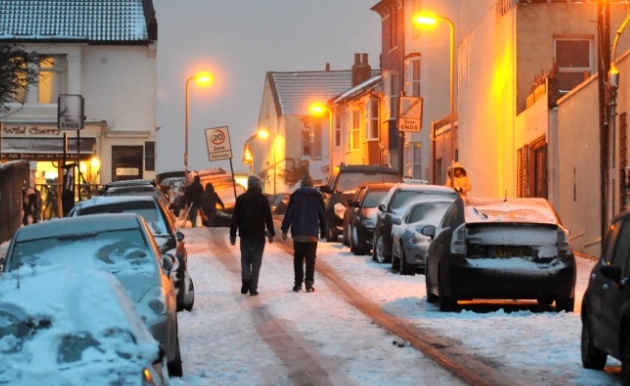
I managed to get out and about a bit in the snow today; in my wellies, with a pocket full of cough sweets and two spare handkerchiefs. I didn't achieve milk or courgettes, certainly didn't cover anything like the stretch of the photos in this post; nor did I take my camera: the photos of Brighton and Hove below are copyright to our local rag, The Argus. Although I sometimes take issue with the paper due to leading and divisive reporting, the Argus online has been extremely informative and supportive in recent days, providing local transport, travel and schools updates. It's also harnessed the talents of amateur and professional photographers from across the city to capture our snowfall with candour.
I have no illusions about Brighton or Sussex in general, and I'm quick to point out the city's tendency to tarnish and rust and go on the turn, but I've also become fiercely fond of it. I often think the Pavilion looks like a huge and fantastic dismantled wedding cake; with a another swirl of snow on snow, various landmarks and  iconic Brighton sights look like they're made out of meringue. Like icing, or powder and paint, snow can hide a multitude of scars and defects: I didn't see any rough-sleepers today and I pray this means they're all relatively comfortable and warm in the city's shelters. 
Brighton may well wipe her nose on her sleeve, but she still proudly wears her heart on it. Self-consciously gaudy and mismatched in the summer, Brighton at the moment looks shyly pretty but a bit confused in white, like a born-again virgin bride of a certain age. Shame about my courgettes and milk though.