"I have always believed, and I still believe, that whatever good or bad fortune may come our way we can always give it meaning and transform it into something of value." (Hermann Hesse)
I was playing Phil Ochs' haunting "There But For Fortune" this morning when today's date dawned on me. Folk singer, activist and unequivocal humanist Ochs wrote the song in 1963, fifty years ago. Thirteen years later, his disillusionment with humankind and his personal demons drove him to take his own life. I've always found it bleakly sad that a young man who defended universal human rights so passionately would perceive his own life so without value or salvation at the age of thirty six. And today is the twelfth anniversary, for the want of a more fitting word, of "9/11". Ochs' words resound eerily across half a century: "Show me the country, where the bombs had to fall; show me the ruins of the buildings, once so tall, and I'll show you a young land with so many reasons why; there but for fortune may go you and I." More than a decade ago, the tallest of the tall crumbled and the most powerful nation on earth was brought to it's knees, in grief, despair, fear and faith. Yet this 11th September, as the new and gleaming World Trade Centre building points skywards once again, the United States and others debate the most reasonable response to the reports of gassed and burnt children in Syria.
My Mum used to say "There but for fortune", or sometimes "There but for the grace of God". She essentially meant that the misfortunes of others could so easily happen to us all: be thankful for the gift of life and it's blessings. I used to wonder whether the grace of God could be seen as fortune or favour; can faith and fortune ever overlap?
I have an atheist friend who, year after year now, has demanded what God was doing as the planes hit the Twin Towers. He will no doubt be questioning the existence of a higher power today, as the terrible aftermath of chemical warfare seeps from the tea-time news. My response to him has at least always been constant. I believe that God created mankind and gave us the gifts of life, knowledge and willpower. Man has repeatedly chosen the ways of war, segregation and destruction. Man commits atrocities, not God. Man's use of knowledge and reason can not only limit the devastation of what we sweepingly deem "acts of God", but could limit the impact of future disasters. I mean no disrespect to anyone in saying again that if we all truly believed in a loving God, we could not take up arms against each other His name, regardless of whatever that name might be.
Faith is an acceptance of fortune, but not complacency. I honestly believe that faith opens doors that mankind can't even get a handle on. Today the incisive shard of light that is the One World Trade Centre rises from Ground Zero as the tallest building in the western hemisphere. It's a defiant beacon in the face of terrorism and natural disasters; many fortunes may be made and lost there. As I type this, New Yorkers are gathering in it's long shadow to commemorate the moment the first plane hit the Twin Towers. We rebuild beautifully and respectfully, as we debate, apparently endlessly, whether we should bomb and break elsewhere. Whether you sympathise with politicians of any flavour or none, whether you are a fan of Barack Obama or not, their anxiety over Syria as fellow human beings is palpable on this day. We can prevaricate and protest and preach and we can pray. There but for fortune go you and I.
"We may lack riches, but the greatest fortune is what lies in our hearts." (Dean Koontz)
"There is a tide in the affairs of men,
Which, taken at the flood, leads on to fortune.
Omitted, all the voyage of their life is bound in shallows and in miseries.
"We are all visitors to this time, this place. We are just passing through. Our purpose here is to observe, to learn, to grow, to love; and then we return home."
(Proverb of the Indigenous people of Northern Territory, Australia)
I was in two minds (happens a lot) about writing a post for Australia Day, but I eventually succumbed to my longstanding love for The Lucky Country and a couple of cyber-nudges from two greatly missed Aussie friends. "Australia Day", 26th January, is a national holiday in Australia and the focus for sentimental and enthusiastic celebration for Australians abroad.
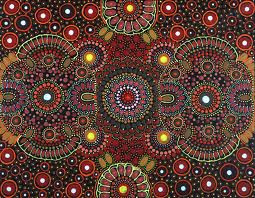
Previously known as "Foundation Day", the holiday marks the landing of the First Fleet: the eleven ships of the British Admiralty, sent to establish a penal colony at the place that would become Botany Bay, New South Wales. Captain James Cook had explored and "claimed" the land some seventeen years earlier, and the Dutch had clocked it a hundred years before him. But it was Captain Arthur Phillip who, after some forays into the surrounding areas, "took possession" of the land around a geographically welcoming cove in the name of King George III on 26th January, 1787. Phillip named their colony after the then Home Secretary, Thomas Townsend - Viscount Sydney. The name "Terra Australis Incognita", Latin for "Unknown Southern Land", dates back to the Roman empire, and legends of the mysterious continent evolved with medieval geography. Yet human habitation of the land began about 50,000 years ago. The ancestors of today's indigenous Australians were among the most ancient peoples of the earth, and the vast land was home to at least two hundred and fifty tribes, with their own languages. When the Europeans invaded, which is what we did, the Aborigines were hunter-gatherer peoples, with complex, oral-based cultures and a tradition of story-telling and celebration. Spiritual values were strong and binding to the land itself; there was a reverence for nature. "The Dreamtime" encompasses not only the story of the creator spirit and creation itself but also births the animist beliefs that have survived tens of thousands of years.
The stories of The Dreamtime shaped Aborigine laws and customs, incorporating art and dancing. The emphasis was on belonging to and showing respect for the land that nurtured them; Australian soil is known to be the oldest on the planet, and the driest. Yet it remains a painful fact that the Federal Government of Australia would not recognise Aboriginal title, the traditional ownership of any land, until 1992. National research in 2009 confirmed that ninety percent of all Australians polled felt it was important to recognise and include the indigenous culture as part of the Australia Day festivities; however, the commemorative date of the celebration is still divisive. Although many indigenous Australians celebrate Australia Day, "Invasion Day" protests occur almost every year. Moves to change the holiday to another date may well cause further rifts in the population, at a time when the emphasis is on recognition and reconciliation. I love Australia: I've been fortunate enough to visit the Lucky Country five times in the past twenty years, although not since 2008. From day one, I felt almost seduced by the country; I long to go back and familiar sights on various antipodean based relocation series find me sniffling in front of the telly. It helps that I'm uncommonly fond of large spiders, snakes and reptiles, but the colour and vibrancy of the country seem to draw energies out of my usually quite shy personality. In Australia, I'm able to indulge my penchant for trees, rocks and soil without feeling at all unfeminine. I get to climb up things, simply because they're there. I can wear as many colours as I want, how I want, with bangles up to my armpits. Every second person you meet really does have an Irish grandmother. In fact, the blend of immigrant cultures has borne it's own aspirational kinship. Some of the good friends I've known from Australia have been from very mixed race backgrounds and others have extended families that include indigenous Australians. The Celtic heritage is instantly reassuring, but I've always been fascinated that it sits so deep and easy with the art and stories of The Dreamtime, which are simultaneously unsophisticated and intricate.
The relevance of the landscape and it's supported nature is unashamed, even when Australia boasts the twelfth largest economy in the world. The presence of nature and evolution itself is palpable, even in the cities. In a country that now paints itself as not particularly religious, the bedrock itself seems invested with spirit and wants to sing about it. The last time I visited, I made it to the red, dusty centre: Alice Springs and Uluru were National Geographic-pretty but the ancient power of the landscape was breath-taking. The photos at the bottom of this post are mine; I was able to wait before dawn to see the rocks of Uluru change colour as the sun rose. I found it profoundly spiritual to witness new daybreak, almost at the dateline, in such prehistoric terrain. So I have mixed feelings about celebrating Australia Day, but I have no qualms abut celebrating Australia, as a country and as a people. I've written this post with an affection and empathy that I hope is obvious: there's no intention to offend anyone who calls Australia home. I've included two blessings here that have evolved from the optimistic indigenous Christian movement in Australia. The country has no state religion, but the Catholic Church has benefited from post-war multi-cultural immigration and now has the largest affiliation. The Catholic education system is still the largest non-government educator; similarly, Catholic Health Australia is the largest non-government healthcare provider. However, as social journalist Caroline Jones noted: "Aboriginal people are a steady beating heart at the centre of Australian spiritual identity." I'm mindful of the almost biblical battering the elements have unleashed on Australia recently: some of my friends have been sweltering and living in fear of wildfires; others were dealing with torrential downpours and the threat of tornadoes on this 26th January. My thoughts are with them. God bless Australia, everyday.
"A Prayer for Reconciliation"
Father of all,
You gave us the Dreaming:
You have spoken to us through our beliefs.
You then made Your love clear to us in the gift of Your Son.
We thank You for Your care:
You own us,
You are our hope.
Make us strong as we face the problems of change.
We ask You to help all the peoples of Australia to listen to each other and respect our cultures.
Make the knowledge of You grow strong in all people,
So that You can be at home in us and we can make a home for everyone in our land.
"A Blessing"
To all who walk this land,
May you always stand as tall as a tree,
Be as gentle as the morning mist,
As strong as the earth under your feet.
May the warmth of the campfire be in you;
And may the Creator Spirit of the Southern people always watch over you.
(All photos: Gigi, album)
"This is the land of dreamings, a land of wide horizons and secret places. The first people, our ancestors, created this country in the culture that binds us to it."
(Hetti Perkins)
"Keep your eyes on the sun and you'll not see the shadows."
"God said: “Let there be lights in the dome of the sky, to separate day from night. Let them mark the fixed times, the days and the years, and serve as luminaries in the dome of the sky, to shed light upon the earth.” And so it happened: God made the two great lights, the greater one to govern the day, and the lesser one to govern the night; and he made the stars. God set them in the dome of the sky, to shed light upon the earth, to govern the day and the night, and to separate the light from the darkness. God saw how good it was. Evening came, and morning followed."
(The Book of Genesis 1:14)
I shall be working this New Year's Eve, until around 11pm - I'm grateful for it and would rather be earning than not, whatever the time of day or year! But I'm mindful of the significance of this evening, and tomorrow's dawn. I won't be one of the very hardy Brighton eccentrics who traditionally take to the sea in the January wind and rain on New Year's morning. But I am enough of a Brighton eccentric to want to walk down to the pier and along the pebble beach in wellies by myself tomorrow morning; it's one of the practical pleasures that drew me to this city in the first place.
Beyond that, I've resolved this year not to make New Year resolutions as such: I'd rather concentrate on what I need to do to enable what I want to happen in my life. Oscar Wilde said that resolutions at New Year are: "simply checks that men draw on a bank where they have no account.” I've learnt a lot about myself and the people around me over the past year; some of it, I've even liked. I'm hoping to grow to be more accepting of the things I don't readily like or even acknowledge. At the end of any day, not everyone will or should like me; but then only I have to be comfortable in my skin as I settle down with my cup of Redbush and an unseemly large piece of treacle tart. For someone who's spent most of her adult life dreading criticism about their clothes, this is progress. I realise that since starting this blog in February, I've surfaced as a kind of hybrid of Anne of Green Gables and Mrs Doyle found reading The Guardian on a long train journey. Luckily, I'm partial to all of these ingredients. It may not have been quite what I was expecting, or indeed everybody's cup of Redbush, but I believe it could have been a lot worse.
"May the nourishment of the earth be yours,
May the clarity of light be yours,
May the fluency of the ocean be yours,
May the protection of the ancestors be yours.
And so may a slow wind
Work these words of
love around you,
An invisible cloak
To mind your life."
(From "Beannacht - A New Year's Blessing", by the late, wonderful John O'Donohue)
"We will open the book. Its pages are blank. We are going to put words on them ourselves. The book is called Opportunity and its first chapter is New Year's Day."
(Edith Lovejoy Pierce)
"The object of a New Year is not that we should have a new year. It is that we should have a new soul."
(G.K. Chesterton)
"Cheers to a new year and another chance for us to get it right."
(Oprah Winfrey)
"New Year’s Day… now is the accepted time to make your regular annual good resolutions. Next week you can begin paving hell with them as usual."
(Mark Twain)
"For last year's words belong to last year's language And next year's words await another voice."
(T.S. Elliot)
"Write it on your heart that every day is the best day in the year."
(Ralph Waldo Emerson)
"No one ever regarded the first of January with indifference. It is that from which all date their time, and count upon what is left. It is the nativity of our common Adam."
(Charles Lamb)
As a longtime fan of Robbie Burns, I love "Auld Lang Syne". He wrote the poem and set it to a traditional folk tune in 1788, yet it endures today across the English speaking world; at funerals and memorials, graduations and farewells and of course on New Year's Eve. The Scots title translated into English is simply "Old Long Since"; days gone by. I care not a jot that it's been done to near death by any performer with half a tonsil, nor that Burns probably plagiarised a couple of 16th century folk songs to construct it: it is remembrance and rekindling in all simplicity. Included below is probably my favourite version, sung as Burns would have wanted to hear it.
"And surely you’ll buy your pint cup
and surely I’ll buy mine!
And we'll take a cup o' kindness yet,
for auld lang syne.
And there’s a hand my trusty friend
and give us a hand o’ thine!
And we’ll take a cup o' kindness yet,
for auld lang syne."
"Auld Lang Syne" Paolo Nutini
Personally, I wish you all everything that you would wish for yourselves, but also every blessing and good thing that you may not know you yet require. May you wake tomorrow knowing your own name and those of your truest friends. If you cannot give a name to God, may you be at peace with those who do, whatever that name may be. Be as good as you can be on any day, believing that both you and the world can be better still tomorrow. I hope your journey this past year has brought you closer to yourself and shown you that you can allow yourself and others a little more kindness in the next one. Slainte, Namaste and God Bless X
Thursday's child has far to go, Friday's child is loving and giving, Saturday's child works hard for a living,
But the child who is born on the Sabbath Day,
Is bonny and blithe and good and gay."
(English fortune-telling nursery rhyme, circa 1838; uncredited)
I was born on a Friday, and the number thirteen has followed me through life from house numbers to close friends' birthdays to holiday flights and exam numbers. So yesterday's date held no fear for me. Yet at least three people reminded me that it was Friday 13th and that I am "accident prone". This is not entirely true, although I do love heights and have a habit of then falling off high things or not being able to find the easy way down: but these are all different stories. I would go so far as to say that thirteen has been something of a "lucky" number for me; certainly it is a familiar one and I'm very comfortable with it.
Various cultures have noted similar folkloric aspects of the number thirteen: this could be partially due to cultures around the world employing lunar-solar calendars; due to the number of lunations in any one solar year, there are twelve "true" months, with days left over for a smaller and allegedly portentous month. The end of the Mayan calendar's thirteenth "Baktun" is still feared by many today as the harbinger of the alleged 2012 apocalypse.In many ancient cultures, the number thirteen represented femininity, corresponding to the number of lunar and menstrual cycles in a year. As the solar calendar repressed the lunar cults by ultimately replacing the lunar calendar, the number thirteen became an anathema.
When Christian monks were charged with organising the calendars and therefore the regularity of religious festivals, a year which contained thirteen full moons instead of twelve would cause a great deal of upset; it would be considered an "unfortunate" year for that reason alone. And yet the moon moves thirteen degrees around the earth every day, and it takes thirteen days for the new moon to become full and another thirteen to wane back.
In ancient Iranian civilisation and the Zoroastrian religion, the number has always been considered sinister. The thirteenth day of each new Iranian year is still considered a day when evil powers may thrive. Despite the wishes of the Islamic government, this day remains a holiday for many in Iran. In the divinations of the Mesoamerican peoples, thirteen was the number of fortune and misfortune; whilst in pagan wiccan traditions, there would usually be thirteen members in a coven and "adepts" would be initiated into the craft at thirteen years of age. Yet in Judaism, it is the age when a boy becomes a "Bar Mitzvah", a full and mature member of the Jewish faith. There were indeed thirteen principles of the ancient Jewish faith; according to the Rabbinic Torah, God has Thirteen Attributes of Mercy. The number thirteen relating to cycles is also held sacred to the teachings of the Kabal.
Notably, many religions have twelve followers (disciples) of one Prophet or Messiah, a brotherhood of thirteen. At Jesus' last supper, there were thirteen people around the table, until Judas departed to betray Him. It's still considered "unlucky" to seat thirteen people around a dinner or meeting table: many companies, establishments and hotels may use a different way of numbering to get round the issue of thirteen seats, rooms or floors. Whereas in numerology twelve was seen as the number of completeness, reflected in the twelve months, twelve hours of the clock, twelve gods of Olympus, twelve tribes of Israel, twelve successors of Muhammad; the number thirteen was considered irregular, transgressing completeness.
Historically, a hangman's noose, when it was still knotted rather than clamped, would comprise thirteen knots; it was thought anything less would not break a neck. Coincidentally, there were traditionally thirteen unlucky steps to the gallows. Fear of the number was recognised as a phobia in 1911, triskaidekaphobia. Sufferers will go to great lengths to avoid anything relating to or labelled as thirteen. ( The fear of Friday 13th is called friggatriskaidekaphobia, incorporating "Frigga", after the Norse goddess that Friday was named after).Yet many celebrities and in particular sportsmen and women favour the number; in my own favourite sport, rugby union, thirteen is worn by one of the two starting centres. Notable centre and Ireland national captain Brian O'Driscoll (love him) has frequently stated that the number thirteen jersey has been lucky for him.
Elsewhere, there are thirteen cards in a suit, whatever your dexterity or fortune; although the thirteenth card in a tarot deck is the card of death! A baker's dozen is rounded up to thirteen loaves. Thirteen colonies originally formed the United States of America; the flag originally had only that number of stars, with new stars added as other states joined the union, but to this day the flag retains thirteen horizontal stripes. There are thirteen shots fired to salute United States Army, Airforce, Navy and Marine Corps generals and admirals. In fact, thirteen is unusually related to United States symbols, The Great Seal being a perfect illustration. The Seal has thirteen stripes, thirteen olive leaves and thirteen olives, thirteen breast coverts on the eagle, thirteen layers of bricks in the pyramid, thirteen arrows in the grips. In Catholicism, the apparitions of Our Lady at Fatima in 1917 were said to have recurred on the thirteenth day of six consecutive months. The feast day of St Anthony of Padua, one of my and my Dad Tony's favourite saints, falls on 13th June; devotions to him include dedicated prayers on thirteen consecutive Tuesdays, and St Anthony's Chaplet of thirteen sets of prayer beads.
And what of Friday? In some cultures, particularly maritime environments, it's been seen as unlucky to embark on a journey or a new venture on Friday since the publication of "The Canterbury Tales," at the end of the fourteenth century. A more recent legend tells of the Royal Navy commissioning a ship, HMS Friday, in the nineteenth century, specifically to dispel such superstition. Her keel was laid on a Friday, she was launched on a Friday and she set sail on her maiden voyage on a Friday; under the command of Captain James Friday. Unfortunately, she vanished without trace and no wreckage has ever been found. This may be due to the origin of this particular urban legend: the inimitable Irish comedian Dave Allen "commissioned" this tale for his 1970s T.V. show! The phrase "Black Friday" was coined in the 1800s in reference to stock-market crashes and other socio-economic disasters. However, there is no recorded evidence in folklore for a "Friday 13th" superstition beforethe nineteenth century. A biography of the composer Rossini, published in 1869, reveals that"he regarded Fridays as an unlucky day and thirteen as an unlucky number; it is remarkable that one Friday 13th of November, he died". Indeed, many theorists claim that any Friday 13th superstition is a modern amalgamation of the two older, separate superstitions. Dan Brown's 2003 novel "The Da Vinci Code" popularised the historical connection between Friday 13th and the Knights Templars. On Friday 13th October, 1307, Philip IV of France ordered the arrest of hundreds of Knights Templars: the majority would be executed, apparently for heresy and immorality. More accessible for most Christians, the grief and pain associated with Christ's betrayal and crucifixion on a Friday has been compounded by the number of diners at His last supper.
The Greeks and many Spanish speaking peoples consider a Tuesday 13th to be an unlucky day: the only recorded explanation I can find for this may be that Tuesday was named after the god of war and discord, Mars or Aries. Again, confusingly, in Italy Friday 17th is held to be an unfortunate date.
This year on Friday 13th January, the luxury cruise ship "Costa Concordia" sank at the Tuscan island of Giglio; at least thirty people were killed and many more injured. On the same day, Europe plunged to new depths of financial crisis as the credit ratings of nine countries were downgraded by the credit agency Standard and Poor's. Yesterday, Friday 13th April, an earthquake hit Palermo in Sicily. On Friday 13th April 2029, scientists predict that the asteroid Apophis will have a worryingly close encounter with our planet, far closer than the orbit of any communication satellite. There have been many days in many years when misfortune has struck or the ways of evil in the world have been clearly visible. Some of them will have been Fridays and the thirteenth days of the month. Many more will not. Days, dates and numbers, like colours, perfumes and melodies, will continue to have associations or familiarities for individuals or groups of people, some of whom would baulk at the notion of superstitions. And religious reverence and ritual may always involve an element of superstition; reverence and devotion need not be diluted by that. I still don't walk under ladders, partly because my mother told me it was disturbing the Trinity; partly because I feel I might just trip over. I asked my brother-in-law to place an each way bet on the Grand National today, on a jockey I thought had a good chance of becoming the first female competitor to win. She came third, which is still pretty fine! I realised afterwards that her horse "Seabass" was numbered thirteen. I have a feeling he won't have placed a bet for me as he thinks I know nothing about the gee-gees. Now, that would be bad luck...
"Perfect Day" Lou Reed & various artists (BBC promotion)


.jpg)


