Showing posts with label retribution. Show all posts

Wednesday, 24 April 2013

"What a piece of work is a man"


"So long as men can breathe, or eyes can see,
So long lives this, and this gives life to thee."
(Will Shakespeare)

Yesterday was of course St George's feast day, but also the birthday of William Shakespeare, playwright and love-poet extraordinaire We can't know for sure that Will was born on 23rd April: he was definitely baptised on 26th April 1564 and the ceremony would traditionally have taken place three or four days after birth. We know that he died on 23rd April 1616, and folklore holds that he died on his birthday, aged just fitly two years.
Will lived a great deal in that half century; he was a prolific writer and had something of a reputation as a philanderer as well. His work was well received and respected in his own lifetime, but it was in the nineteenth century that his popularity rose to lofty heights. His works have now been translated and performed in every major living language across the world and he's generally accepted as the greatest ever English writer. It seems highly fitting that the birthday of the nation's bard should fall on the same day as the feast of the patron saint.
If your only experience of Shakespeare is of cramming unappetising and dry chunks at school, uninspired by a bored supply teacher attempting drama by pitching their nasal drone slightly higher, do give him another go. My fondness for Shakespeare has grown and evolved since any formal English literature studies ended and as my adult life has unfolded. Amid any speculation about Will's personal life, his sexuality and promiscuity, his political leanings and religious beliefs (his mother, Mary Arden, was certainly a devout Catholic), there's much more to the excellent wordsmith than initially greets the schoolkid's reluctant eye.
Themes of passion and sensuality, loyalty and guilt, ambition and mercy, prejudice and reconciliation all shout, whisper or sing through his works. His wisdom is apparently borne of his own very human foibles; his wit holds the wry humour of one who recognises his foolishness. Aside from the beauty of some of the sonnets, there's a timeless relevance to "Romeo & Juliet", "Othello", "Richard III", "The Merchant of Venice", "Macbeth".... I was twelve years old when I first read "A Midsummer Night's Dream" and it still feels as magical to me today:"Look in the almanac; find out moonshine."

"What a piece of work is a man, how noble in reason, how infinite in faculties, in form and moving how express and admirable, in action how like an angel, in apprehension how like a god."


"No more be grieved at that which thou hast done: 
Roses have thorns, and silver fountains mud." 

"Mine eye and heart are at a mortal war,
How to divide the conquest of thy sight." 

"He jests at scars, that never felt a wound." 

"What is your substance, whereof are you made, 

That millions of strange shadows on you tend?" 

"Some glory in their birth, some in their skill, 
Some in their wealth, some in their body's force,
Some in their garments though new-fangled ill; 
Some in their hawks and hounds, some in their horse." 

"Thy love is better than high birth to me." 

"All the world's a stage, 
And all the men and women merely players; 
They have their exits and their entrances; 
And one man in his time plays many parts." 

"The course of true love never did run smooth.” 

"Stars, hide your fires; Let not light see my black and deep desires." 

"By the pricking of my thumbs, something wicked this way comes." 

"Expectation is the root of all heartache." 

"Love is not love 
Which alters when it alteration finds, 
Or bends with the remover to remove." 

"Nothing is so common as the desire to be remarkable." 

"Sit by my side, and let the world slip: we shall ne'er be younger." 

"Tis an ill cook that cannot lick his own fingers." 

"If there is a good will, there is great way." 

"There's a divinity that shapes our ends, 
Rough-hew them how we will." 

"No sooner met but they looked; 
No sooner looked but they loved; 
No sooner loved but they sighed; 
No sooner sighed but they asked one another the reason; 
No sooner knew the reason but they sought the remedy; 
And in these degrees have they made a pair of stairs to marriage." 

"The quality of mercy is not strain'd, 
It droppeth as the gentle rain from heaven 
Upon the place beneath: it is twice blest; 
It blesseth him that gives and him that takes." 

"There is a tide in the affairs of men 
Which, taken at the flood, 
Leads on to fortune 
ommitted; 
All the voyage of their lives
Are bound in shallows and in miseries." 

"How far that little candle throws his beams! 
So shines a good deed in a weary world." 

"Not from the stars do I my judgement pluck; 
And yet methinks I have Astronomy." 

"It is not in the stars to hold our destiny but in ourselves." 

"God has given you one face, and you make yourself another." 

"Cowards die many times before their deaths; 
The valiant never taste of death but once." 

"Better three hours too soon than a minute too late."

"But Oh, how bitter a thing it is to look into happiness through another man's eyes." 

"We know what we are, but know not what we may be." 

"Give every man thy ear, but few thy voice." 

"One touch of nature makes the whole world kin." 

"I wasted time, and now doth time waste me." 

"My crown is called content, a crown that seldom kings enjoy." 

"Heat not a furnace for your foe so hot that it do singe yourself." 

"Fortune brings in some boats that are not steered." 

"Neither a borrower nor a lender be." 

"I would challenge you to a battle of wits, but I see you are unarmed." 

"This above all; to thine own self be true." 


"Who will believe my verse in time to come, 
If it were filled with your most high deserts?"


"Everyday I Write the Book" Elvis Costello (acoustic)


"No legacy is so rich as honesty." 
(Will Shakespeare)


Saturday, 20 April 2013

"Sweet moderation, desert us not" (Billy Bragg)


"No-one would remember the Good Samaritan if he'd only had good intentions; he had money as well."
"I owe nothing to Women's Lib."
(Margaret Thatcher)

Few people will probably be as divisive in death as in life as Baroness Margaret Hilda Thatcher. Aside from the rather beautifully staged pomp of her funeral at St Paul's Cathedral last week, her recent death has also sparked demonstrations and even some parties, from the former mining communities of the north, down to our very own economically challenged Brighton. The latter is of course infamous for all Thatcherites after the Provisional IRA bombed the Conservative Conference at the Brighton Grand Hotel in 1984.
I feel such "celebrations" are pointless as much as they are in poor taste: the woman has died; berating her "I'm alright Jack" attitude by parading and parodying it after her demise seems grossly hypocritical. But do I feel Margaret Thatcher should have had a ceremonial service with military honours, one step down from a full state funeral? Do I feel that those of us who pay our dues to this country and live increasingly hand-to-mouth should foot the estimated bill of £10 million? Hell no.
I can remember my Mum referring to "Thatcher the Milk Snatcher". Much has been made of Margaret's rise to become the first and still only woman prime minister of these lands. Yet her womanhood was as far removed from my ideals of the protection and equality of femininity as her historical female premiership was from my mother's long widowhood on a pension compromised by motherhood. Margaret Thatcher wasn't unduly bothered about lighting the way for other women: her cabinet was famously a "wimmin-free" zone.
I respect and accept that other members of my own family and some friends remain true-blue Thatcherites. Mine is the socialism of my Mum and Dad; a welfare state with the emphasis on a hand up rather than stop-gap handouts. A grocer's daughter from Grantham, Lincolnshire, she was fortunate enough to marry a rather wealthy man who cushioned her climb up the political ladder. She was a shop keeper's daughter who, sadly, seemed to forget the price of a loaf of bread. 
I'm in agreement with such diverse talking heads as Ken Livingstone, Geoffrey Roberston QC and Gorgeous George Galloway who attribute many of the UK's socio-economic problems today to the destruction of industry and financial de-regulation which featured so heavily in the Thatcher administration. Human rights lawyer Roberson has described the era as one of "unalloyed greed", sold on the huge deception that, pretty much left to their own devices, bankers would allocate resources rationally and for the general good. Thus began a decline in saving and investment and an accumulation of private and public sector debts; a path where the cracks would eventually creep all the way to the banking crisis of 2008. 
The destruction of manufacturing jobs was temporarily masked by opportunism and get-rich-quick schemes; skilled work gave way to a welfare "class"; house-building was usurped by estate agency. It appears to many of us that the policies of Cameron's government have a chillingly familiar ring to them, but there will be no bonanza of new oil to come to the government's rescue, or the country's. 
So clearly, not a fan of Margaret Thatcher then. I admit that I cringed once more when I saw the reportage of her quoting St Francis of Assisi's prayer for unity and harmony as she took office in 1979. But I was even more uncomfortable and very sad watching reports from former industrial communities in South Yorkshire and Scotland of jeering and mocked-up funeral pyres, toasting Maggie's decline in hell. Whilst I object to paying for a song and dance about the death of this elderly lady, I don't wish to see anyone jig on someone else's grave. Margaret Thatcher may not have been for turning, but her death from cardio-vascular distress and stroke, following treatment for bladder cancer and dementia, confirms that the baroness is definitely not returning.
The Dean of St Paul's Cathedral, the Very Reverend Dr David Ison, played a central role in last Tuesday's very public funeral. He took up the deanery at St Paul's after his predecessor resigned over the "Occupy London" protest furore, when anti-capitalist protesters camped outside the Cathedral, close to the Bank of England. Dr Ison has also linked Mrs Thatcher's policies with those of today's coalition. He told CNN International that: 
"You have to ask yourself the question: why it is, 23 years after she left government, Margaret Thatcher is still such a controversial figure and I think part of the answer is we still haven't come to terms with the hurt and anger many parts of society have felt because of the legacy of her policies. And there is some real work to be done here about the relationship between the rich and the poor in our society and how we can work together, instead of being opposed to one another. That's a particular agenda that I think that this funeral will be throwing up and highlighting."
I don't believe the gun carriage and the silencing of Big Ben were appropriate  but I do believe that respect and prayer for another person's passing are. May she rest in the peace we all eventually aspire to, no matter what our earthly advantages or failings. 


"Between the Wars" Billy Bragg

"I kept the faith and I kept voting, 
Not for the iron fist but for the helping hand; 
For theirs is a land with a wall around it 
And mine is a faith in my fellow man; 
Theirs is a land of hope and glory , 
Mine is the green field and the factory floor "
(Billy Bragg) 


"Make me a channel of your peace: 
It is in pardoning that we are pardoned, 
In giving of ourselves that we receive, 
And in dying that we are born to eternal life." 
(St Francis of Assisi) 

Sunday, 17 March 2013

The Stranger at the door: for peace in Ireland

"Love is never defeated, and I could add, the history of Ireland proves it."
(Pope John Paul II)

"Hands Across the Divide", Maurice Harron's Peace Sculpture in Derry, N Ireland

At the close of St Patrick's Day, with no commentary on the whys or rights or wrongs behind the recent shock of violence in Northern Ireland, pray with palms upturned to the future; the lines you may find there, like the lines of the prayer included here, are themselves ancient but timeless.
If you really, truly want peace now and forever, never chart your future by looking back into the fray.


"You are the peace of all things calm, 
You are the place to hide from harm, 
You are the light that shines in dark, 
You are the heart's eternal spark, 
You are the door that's open wide, 
You are the guest who waits inside, 
You are the stranger at the door, 
You are the calling of the poor, 
You are my Lord and with me still, 
You are my love, keep me from ill, 
You are the light, the truth, the way, 
You are my Saviour this very day." 
(Old Irish prayer - Anon) 


"Be Thou My Vision" Van Morrison

"Peace is liberty in tranquility."
(Marcus Tullius Cicero)

Saturday, 26 January 2013

A funny thing happened on the road to Damascus

"Nobody can hurt me without my permission."
(Mahatma Gandhi)

( 9th February:I first posted this a couple of weeks ago and retired it a few days later. I've now edited it with a long pen: I've tried to be a bit more objective.The last thing I want is for this blog to be dismissed as bitter; not a feeling I care to hold onto, whether on paper, on the 'net, or in life).

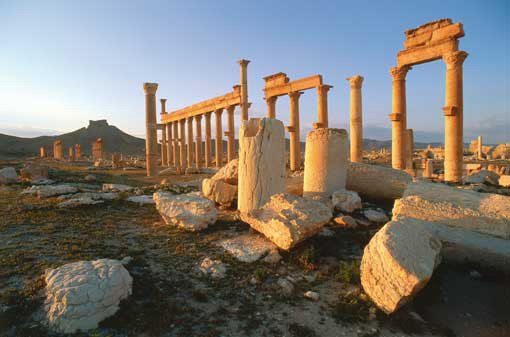
25th January was Burns' Night; it was also the feast of St Paul's conversion to Christianity, while en route to Damascus to persecute Christians. Many of us will use the phrase "road to Damascus moment" to refer to the turnaround of something, however trivial in our version of events, at some point. Given the current volatility in and around the Syrian capital, most of us are blessed not be travelling on a road in or out of Damascus in any direction. 
I had a little Damascus moment that night while I was sitting here in the middle of a local power cut, writing about my poet-crush Robbie Burns, glancing back through my last couple of posts. A few days earlier, I wrote that I wanted to grow to be a lively and loved old lady. Looking at Phoebe Hessel's story, surely that's a life well lived: to demonstrate conviction, courage and great love; to maintain your wits and your vitality beyond youth; to display independence and self-respect and earn the affection and respect of others. I have no idea what religious beliefs Phoebe may have held; it could be said that she spent the early part of her life cloaked in deception. Yet to my mind, she was essentially true to herself, even when the Fifth Foot Regiment spent nearly two decades assuming she was just one of the lads, who had a couple of off days each month! 
When I recently attended mass in another parish, the priest happened to speak about the taking of a person's "good name" and how insidious and demoralising that can be. As a former prison chaplain, he'd seen how the system can break a spirit by replacing their given name with a serial number. It can dehumanise a person; bringing someone's name into disrepute can be similarly destructive.
I have no true idea if I have a particularly good name; I'm reluctantly aware there's already an element of arrogance in professing to be comfortable with myself and calling some things I've done achievements. I have a wilful naivete in some areas, but I'm wise enough to know that if I can see my own insecurities when I'm standing on them, then anyone stepping back to find fault wouldn't need binoculars.
I've recently had a profound reaction to an older lady"bad-mouthing" me: I've worried endlessly about what awful things might be said about me in my absence. I've beaten myself up about why this individual might dislike me; as if there's a universal obligation to like me. My reaction splutters as much about my own insecurities as this lady's animosity may say about her's. 

It's human nature to worry when people say things about you that are untrue. Unfortunately it's also human nature to gossip. The word "gossip" has itself been much maligned, originally meaning "Godparent" or "familiar acquaintance". It hasn't always been seen as bad practice: in Shakespeare's time, a gossip was someone who sat through a woman's childbirth, talking to provide reassurance and comfort.. Gossip can often promote a sense of belonging , bonding by projecting another party as the outsider; gossip always bears an element of attention seeking. Whenever we humans get territorial, we're generally unsure of where we fit in.
As for me, I know it's not unusual to seek assurance when you feel wronged, but I realise that my whingeing to others about attacks on me hasn't exactly been polishing this woman's name-plate either. Psychologist Alfred Adler said that:"It is easier to fight for one's principles than to live up to them."  When we hold onto grudges, we want to see the depth of our own hurt reflected in the remorse of the offender. Both my parents felt you shouldn't let the sun set on an argument; my Dad told me that if you went to bed with someone else's venom in your veins, you could only wake up feeling as much poisonous as poisoned. Someone may try to diminish me due to their lack of self esteem, but my own insecurity that sends me clamouring for reassurance is hardly attractive or inspiring. 
My own tiny Damascus moment was far nearer to home than the strife riddled Middle East. There was no blinding flash of light; in fact, there wasn't even electricity for some part of my little street that evening. Unlike St Paul, enlightenment didn't blind me for three days and normal power has been restored. Most of us do want to be remembered for a good life well lived, like Phoebe. We want to be liked. Sometimes, we might even resort to tarnishing another's nameplate to make our own appear that much brighter. People often attack others to defend a perceived vulnerability in themselves. When you're feeling low, it often seems easier to drag something or someone down than to raise your head above the parapet. Bitchiness, general unpleasantness, consumes a lot of energy and time; wouldn't you rather be laughing / loving / living?
It's no longer desperately important for me to know why anyone dislikes me, especially if I consider how little kindness they may have for themselves. My clever Dad also used to say that those who really know you will soon realise when someone else doesn't know you at all. We're all a little fearful of what a bright torch to the dark corners of our psyches might reveal: at the very least, mine are full of chocolate crumbs, heels that are too clackety to wear in church, drafts for this blog and little quirks and faux pas that have my name written all over them. I want my name to sit kindly on lips and ears; ultimately, that name can only be irreparably tarnished by my own actions, not by the words of another. 
And bitterness really is best served as chocolate.


"To speak ill of others is a dishonest way of praising ourselves. Nothing is always a good thing to say and often a clever thing to say."
(Will Durant)

"Part of every misery is, so to speak, the misery's shadow or reflection: the fact that you don't merely suffer but have to keep on thinking about the fact that you suffer."
(CS Lewis) 

"Every man alone is sincere. At the entrance of a second person, hypocrisy begins." 
(Ralph Waldo Emerson) 

"Speak ill of no man, but speak all the good you know of everybody."
(Benjamin Franklin)

"For beautiful eyes, look for the good in others; for beautiful lips, speak only words of kindness; for poise, walk with the knowledge that you are never truly alone." 
(Audrey Hepburn)


 "I'm On My Way"  The Proclaimers

Saturday, 1 December 2012

The Colour Red

"Be the change you wish to see in the world."
(Mahatma Gandhi)


Today, I pinned on a small red ribbon with frayed ages and a rusty little safety pin with a great deal of reflection and also some pride, even though I would be spending most of the day at home. I have done this on the same date with the same red ribbon for many years now. 1st December each year has been World AIDS Day since 1988. HIV / AIDS (Human Immunodeficiency Virus infection / Acquired Immunodeficiency Syndrome) was first clinically observed some years before, in 1981. In 1990, the New York based "Visual AIDS Artists Caucus" created a visual symbol to demonstrate compassion for people living with AIDS and those caring for them. Inspired by the yellow ribbons honouring American soldiers serving in the Gulf war, they chose the colour red for its:"connection to blood and the idea of passion -- not only anger, but love." It may sound trite, even odd if I say that I have a tender spot for AIDS: becoming involved with people affected by, living and dying with AIDS changed my little world and made me a stronger and, I believe, nicer person.
The Terrence Higgins Trust is a UK-based charity that was formed in London in 1982, named after one of the first named people to die from AIDS disease in the UK. It was formed by his partner and friends in an attempt to both personalise and publicise the disease. Many years ago, I was a voluntary carer and fundraiser with THT after my best friend at that time, a gentle and funny gay male nurse named John, took his own life to escape the stigma of what was then a deadly diagnosis. He was 21; he had apparently contracted the virus from his first and only boyfriend.
As a carer, I helped in a donated "safe house" in South London, where shelter, support and eventually palliative care was offered to up to four people at a time living with AIDS; where family was unaware, absent or unsympathetic. Treatment was less effective then and awareness about the condition and it's transmission was tainted by scandal and bigotry. My day-job colleagues didn't want to know exactly what I did in "that house" and my mother and sister couldn't understand why I did it. We fed and bathed, medicated and cleaned, emptied bed-pans. We were there. I drooped after a couple of years and following the deaths of all those I had been helping to look after; many house volunteers had been there longer and were still there when I left. It was at times heart-wrenching and scary; to this day, it remains the best, finest thing I've ever done.
In most parts of the developed world, HIV / AIDS is no longer the graphically painful but rapid death sentence it once was. Yet AIDS  is still a global pandemic: by 2010, around 35 million people had contracted the disease worldwide. Since it's recognition in 1981, more than 32 million men, women and children across the globe have died from what was initially dubbed "a gay plague" by the media. It's estimated that 3.4 million of those currently infected are under fifteen years of age. South Africa presently has the largest population of people living with HIV / AIDS, nearly six million. In sub-Saharan Africa, life expectancy in the worst affected countries has fallen drastically: from 65 to 35 years in Botswana. South East Asia is the second most affected region, estimating at least 4 million cases. Infections in the Middle East and North Africa have risen by more than a third over the past decade, with a notable rise in new infections also recorded in eastern Europe. In the USA and also across the UK, it's believed that a quarter of all those infected are unaware of their status. AIDS is the sixth leading cause of death among men and women aged 25 - 44 in the States. It may take you 10 minutes to read this blog entry; every 10 minutes, someone in the States is infected by the HIV virus.
Many campaign groups say the original stigma associated with HIV / AIDS remains as big a problem as the disease itself. In China, there are reports of  some hospitals turning away people with HIV infections and refusing surgery for patients who test positive for the virus. In vulnerable communities such as Ethiopia and Zambia, reported abuse of people living with HIV / AIDS remains high. Nearly half of all countries do not have laws in place that protect people living with the virus from discrimination. The AIDS Healthcare Foundation in Nigeria admits that anti-AIDS bigotry is still rife in a country where the disease is a taboo, commonly seen as a death sentence as "punishment". It is a fact that there is still no cure for AIDS: it is always fatal without treatment.
In the States, most patients who survive many years after diagnosis do so because of the availability of a combination of highly active antiretroviral therapy (HAART). The antiretrovirals suppress the replication of the virus in the body, allowing the helper blood cells precious time to rebuild the immune system. As a suppressant rather than a cure, HAART has been very effective for the past decade. However, the virus can become resistant to any one combination of HAART medications at any time, although genetic tests are largely available to determine whether an HIV strain is resistant to a particular drug. New medicines are still being developed to treat HAART resistant HIV. And treatment with HAART as a collection of different medications has it's own collection of complications and side effects: diarrhea, nausea, sickness and general weakness. When used over an extended period of time, these medications also increase the risk of heart attack. Of course, people responding to antiretroviral treatment can still pass on the virus through sex or shared needles; to date, there is still no vaccine against HIV. Ultimately, prevention truly is the only cure at this time.
In 2011, the United Nations signed the Political Declaration on HIV/AIDS, as a strategy to achieve universal access to HIV prevention, treatment, and care by 2015. The document marks an historic milestone on the road-map to the beginning of the end of AIDS. We need to reach 15 million people living with HIV with antiretroviral treatment by 2015: this has to be achievable; HAART therapy has already saved an estimated 14 million life years in low and middle income countries. However, around 7 million people known to be eligible for this treatment are still unable to access it. Recognised foreign aid has traditionally been the major source of funding to fight the epidemic worldwide, but for the first time in history, the UN has reported significant domestic investments by lower income countries to address their own HIV / AIDS situations. Each World Aids Day should be a time of remembrance but also of celebration of any progress and acceleration of response in recent years. We have to believe that ending this epidemic is as feasible as it is certainly affordable. 
Progressive medications can help the human body to heal and maybe even protect itself from this virus, but we also need to eliminate the enduring stigma and discrimination against people living with and affected by the disease. Fear and ignorance continue to undermine efforts to provide services to prevent, diagnose, and treat HIV/AIDS. Current restrictions on the entry, stay, and residence of people living with HIV in many countries lack scientific basis and are often relics of the media-fueled terror dating from early in the epidemic. This is a virus, a disease; as essentially associated with blood as anemia, sickle cell and leukemia, as identifiable with "behaviours" as diabetes, lung cancer and heart disease. It's been repeated endlessly over the past decades that the virus itself is a stranger to discrimination or preference. Personally, I can vividly recall pushing a beautiful but visibly fragile young man in a wheelchair to local shops only to find that ordinary people with their children in tow and shopping in hand felt moved to spit at both of us and wish him a speedier death. I pray this no longer happens on the streets of south London; I extend my prayers to the other corners of our world where such distortion of the human spirit is a daily occurrence.


*For John C, Campbell, Carl, Eddie, Hayden, James and Paolo and the others I  was privileged to have known for that short while*


"AIDS occupies such a large part in our awareness because of what it has been taken to represent. It seems the very model of all the catastrophes privileged populations feel await them."
(Susan Sontag)

"The global HIV/AIDS epidemic is an unprecedented crisis that requires an unprecedented response. In particular it requires solidarity -- between the healthy and the sick, between rich and poor, and above all, between richer and poorer nations. We have 30 million orphans already. How many more do we have to get, to wake up?"
(Kofi Annan)


www.worldaidsday.org

www.tht.org.uk 

www.avert.org/children.htm 

www.one.org 

susshivchap@gmail.com


"One"  U2


"We're one, but we're not the same;

We get to carry each other
Carry each other"
(Paul Hewson / Bono)

Sunday, 16 September 2012

Blog-bullies and the beauty of Bunyan


"Who so beset him round with dismal stories 
Do but themselves confound;
His strength the more is."
(John Bunyan) 


The late John F. Kennedy famously said: "Freedom is indivisible, and when one man is enslaved, all are not free." Sadly, bigotry and war are also indivisible. Vengeful conflict and determined aggression are rarely easily contained. This was one of the points I was striving to make in my post on 9/11.
My post prompted a couple of colourful but depressing messages to me from someone calling himself "Jerry B. Good". I would hazard this is not his real name. Jerry found my sentiments anti-American. This initially upset me a lot: I have friends in the United States and hope to visit the land one day; I'm fascinated by the diversity and optimism of the culture. His accusation was unsettling, but some US friends have since reassured me. The intention of my post was not to be anti any group or ideology, rather to be pro-world and pro-peace.
Jerry informed me that he's passing my details to the United States Federal Bureau of Investigations. I told him I was a big fan of Eliot Ness and keen to liaise with the FBI, particularly if Sean Connery could be involved. Unfortunately, humour and sarcasm don't seem to register with Jerry, or indeed feature in bigotry in general. His return was an unfriendly-fire of abusive name calling: none have any place in a friendly blog and some seem to have confounded Spell Checker. His suggestion that I would look better in a full burkha as a "Muslim-lover" was intended to be hurtful to me as a female, but he does have a point. I do love Muslims, Buddhists, Hindus, Presbyterians, Pagans... I believe this is what striving to be a good Christian is all about.
Although incensed by my "cowardly allegiances", he hasn't had the blogging-balls to post his comments using the forum provided on here. Jerry should be aware that I do not scare easily: I grew up in a far from cloistered area and now live in another that appears to have been brought to it's knees more by social deprivation and systemic substance abuse than by the call to God. If my response to Jerry seems less than placid, I am always deeply offended by racial and religious bigotry and bullying. I'm also mindful of a story retold by an astute parish priest, about a snake who promised God he wouldn't bite local villagers. Once the village folk became aware of the snake's reluctance to defend itself naturally, they took every opportunity to beat and abuse it. When the wretched creature presented it's sorry self to God, He said: "I told you not to bite, I did not tell you not to hiss!"  
I am, however, deeply sensitive to the sensibilities of others, possibly heightened by news of further atrocities and possible recriminations in the Middle East; I was hurt to think that this little blog might have alienated or upset anybody. I've now barred Jerry from my personal email, although all constructive criticism is heartily welcomed here. I wish him happiness and good humour and hope that he may enjoy listening to Daniel Versteegh's serene interpretation of John Bunyan's vividly evergreen words.
Peace.


"The better part of valour is discretion."
(William Shakespeare)


"He Who Would Valiant Be"  Daniel Versteegh

Tuesday, 11 September 2012

On this day, 9/11


"If you and I are having a single thought of violence or hatred against anyone in the world at this moment, we are contributing to the wounding of the world."
(Deepak Chopra)


"For me and my family personally, September 11 was a reminder that life is fleeting, impermanent, and uncertain. Therefore, we must make use of every moment and nurture it with affection, tenderness, beauty, creativity, laughter."
(Deepak Chopra)


"9/11" or simply 11th September; whatever your linguistic preferences or indeed whichever side of the dateline you reside, most people who noted the fall of The World Trade Centre's towers and the related attacks will remember where they were when they saw or heard the news. Eleven years ago today, I was working for a well-known international company, based in the heart of the City of London. I would later learn that one of the company's brightest young American executives had been killed at The World Trade Centre. That Tuesday in 2001, I was on a day's annual leave and had been shopping for my mother. When I returned home, I found her standing in front of the TV, watching the reportage of the attack on the first of the Twin Towers.
At first, I thought she'd stumbled on a high-budget US disaster movie, until I saw the looped news stream on the screen. I remember putting the frozen food and the vegetables on the floor and standing with her. Even back then, her health had not been brilliant and she already used a walking stick due to a hip operation and sever arthritis. But we continued to stand in front of the screen, barely ten feet away from the sofa. We watched the second plane crash, at which point I realised I was in tears, my hand over my mouth. Each crash, each explosion, each collapse was accompanied by commentators and onlookers alike screaming: "Oh God! Oh my God!" When Mum finally managed to say something, she pointed at the screen and said: "This is real isn't it? This is the News?"
There are so many poignant and iconic images from that day and the aftermath. I know countless other people will have felt as broken as I did watching people frantically waving and then throwing themselves out of the windows of the burning towerblocks. Some two hundred people are believed to have jumped, most on their own, some in pairs or groups. Some used curtains or tablecloths or even shirts in a vain attempt to parachute against the pace and scale of the fall. The writer Tom Junod later described these poor souls in such horrific free-fall as looking like people trying to swim up a mountain. Their final dilemma haunts me, as a Catholic who believes you should never resort to taking your own life: I am very claustrophobic and my sense of self-preservation is also very strong; I believe I too would have been hoping for the wings of angels.
After 9/11, America's risk and threat landscapes changed. When "The War on Terror" was announced, the implications of that phrase struck fear in my heart again. Obviously, the very name is a contradiction in terms: war is itself both terrible and terrifying. And when the enemy is unspecified or even transient, any conflict can be extensive, indefinite and, like a heat-seeking missile, launched in any direction. We frequently hear that the world's perceptions of terrorism and war changed after 9/11, the day when ordinary civilians in America were targeted in what they might well have called someone else's war, someone else's terror. In the decade following 9/11, some 25,000 people worldwide have died in known terrorist attacks. During this same period, it's estimated that as many as 100,000 Iraqi civilians have died in war torn Iraq. As journalist and political activist Gloria Steinem points out: "From pacifist to terrorist, each person condemns violence, then adds one cherished case in which it may be justified."

I'm increasingly aware of the many conspiracy theories surrounding 9/11; I feel these and any personal views I may have on the subject should never detract from the fact that 60,000 people were injured and nearly 3,000 lost their lives in those few hours on that day in 2001. Throughout today's anniversary in the United States, there were scheduled Moments of Silence to focus on the catalogue of dreadful events, starting at 8.46 a.m. when the North Tower of the WTC was hit, through to 10.28 a.m. when that tower fell, half an hour after the South Tower.
Since 1987, interfaith media organisation "Odyssey Networks" ( odysseynetworks.org ) has been providing America's religious denominations with a platform to share their stories with the public and each other. Last year, to mark the 10th anniversary of 9/11, Odyssey commissioned network member and Franciscan friar Daniel Horan to write a commemorative prayer. I've reproduced part of it here. His emphasis is on reconciliation with our own pasts as well as with others, rather than future retribution. On this day a couple of years ago, I mentioned to a Social Services colleague that I could remember exactly where and how I first saw the breaking news of the carnage. He sneeringly asked me where God had been on that day: God was right there, waiting to be seen.


"God of Our Memories: A prayer"
At times Your blessing of memory seems like a curse.
The remembrances we carry weigh us down like burdens
rather than lift our hearts to You.
The tragedies, the violence and the sin of our world threaten our ability
to see Your presence among us,
to experience the breath of life You give us,
to recognise the working of Your spirit in our lives.

We know that what it means to be created in your image and likeness
is to be peacemakers and lovers in our world.
May we indeed be instruments of Your peace,
offering love, pardon. faith, hope, light and joy to the world.
May Your spirit move over the chaos of our memories
and renew the face of our hearts as You continue to renew the face of the Earth.
May our memories, the gift You have given us,
recall ones once called enemies as friends
and call to mind those we have loved and lost
until we share with them the joy of Your presence in the world to come.
Amen.
(Brother Daniel Horan, OFM)


"The Tear of Grief" 9/11 Memorial, Bayonne Harbour in New Jersey

"It is my contention that most people are not mugged every day, that most people in this world do not encounter violence every day. I think we prepare people for violence, and I think just as importantly we should prepare people for the definition of being gentle."
(Bob Keeshan)


"Amazing Grace"  Leann Rimes